The Evolutionary Blueprint of AI: Master Summary
Discover the evolutionary blueprint of AI. From ancient organisms to modern artificial intelligence, we trace five biological breakthroughs that built the human mind. Learn how data science, psychology, and philosophy converge into a cohesive strategy for executives in this master summary.
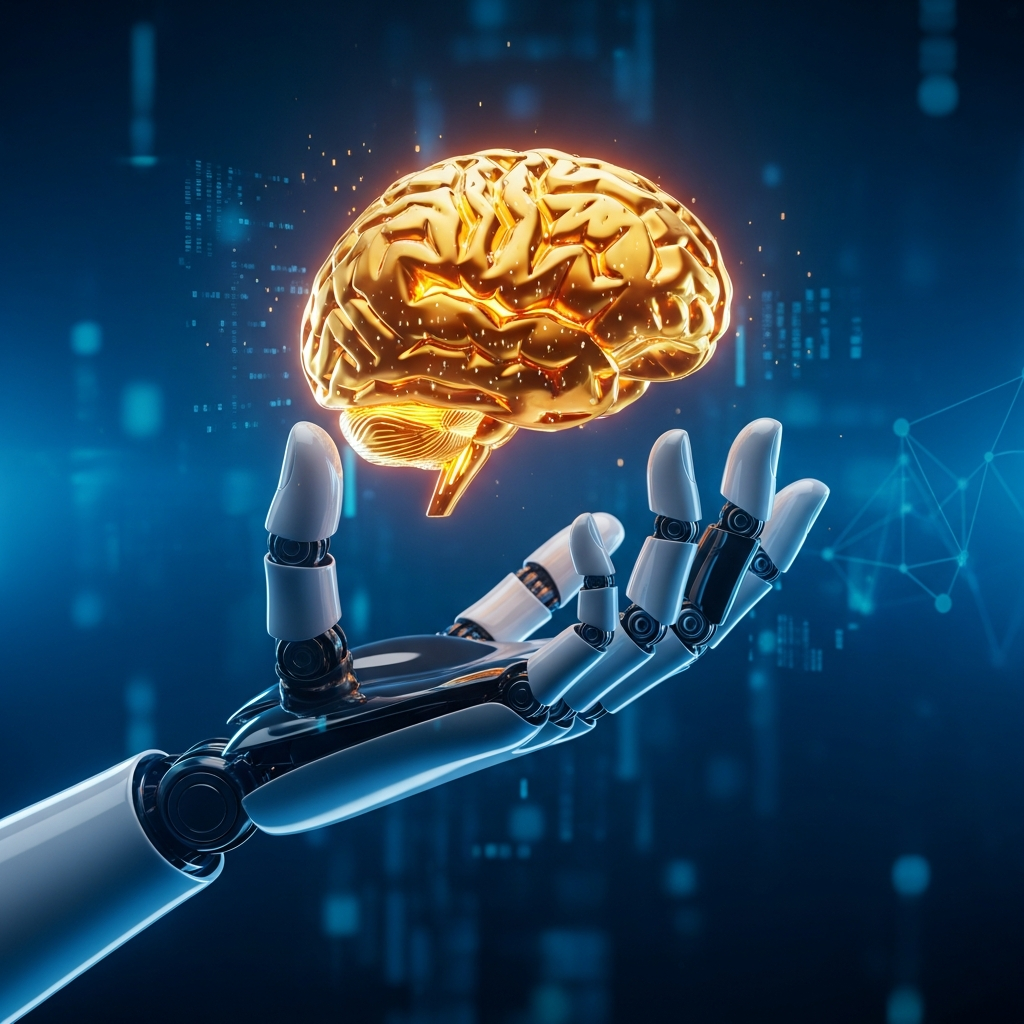
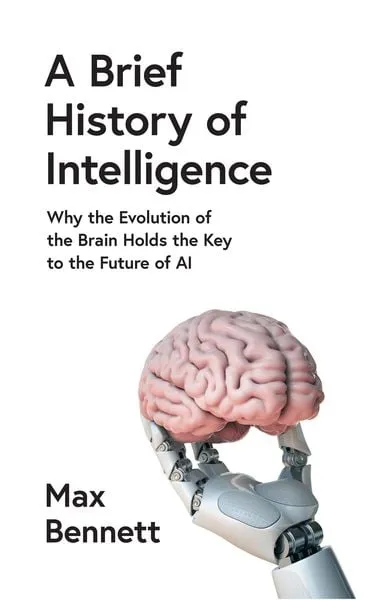
In Max Bennett's book "A Brief History of Intelligence", we are taken on a four billion year journey. The evolution of the human brain provides the ultimate reference guide for the past, present, and future of artificial intelligence. By examining this journey through the lenses of data science, psychology, and philosophy, we can build a cohesive roadmap for enterprise strategy. Here is the master summary of the five major breakthroughs in brain evolution and what they mean for your business.
Breakthrough 1: Steering and the Foundations of Learning
The first brain belonged to ancient worm like creatures who needed to move toward food and away from predators. This required categorizing the world into positive and negative stimuli, which psychologists call valence. This leap introduced associative learning, the biological equivalent of early machine learning.
From a philosophical standpoint, this marks the birth of basic subjective experience where a stimulus first gained meaning. For data scientists, this mirrors algorithms that optimize for a single reward function. Business leaders must recognize that foundational AI starts here. Your basic predictive models are like these early brains, reacting to stimuli to steer your business away from risks and toward profits.
Breakthrough 2: Reinforcing and the Birth of Pattern Recognition
Around five hundred million years ago, the first vertebrates emerged. These fish like creatures developed a cortex for pattern recognition and a basal ganglia for trial and error learning. In psychology, this is the foundation of behaviorism, where animals learn to repeat actions that yield rewards.
In data science, this breakthrough perfectly mirrors Temporal Difference learning and Actor Critic reinforcement learning models. AI systems like AlphaZero use this exact architecture to master complex tasks. For CTOs, this stage represents the transition from simple reactive algorithms to deep learning systems.
Breakthrough 3: Simulating and the Power of Imagination
The third breakthrough arrived with early mammals. Hiding from predators required more than trial and error. Mammals developed the neocortex, granting them the ability to simulate actions internally before executing them. They learned by imagining, which introduced episodic memory and complex planning.
Philosophically, this is the dawn of mental time travel. Psychology recognizes this as the shift from habitual behavior to goal directed planning. For data scientists, this is the equivalent of model based reinforcement learning and generative AI. CEOs should view generative AI as a simulation engine. Businesses can use these world models to simulate market conditions and anticipate competitor moves without risking real world capital.
Breakthrough 4: Mentalizing and Social Intelligence
As primates evolved, survival became a political game. Primates evolved the ability to model their own minds, which allowed them to model the minds of others. This psychological milestone is known as Theory of Mind. It enabled imitation learning, deception, and alliance building.
Philosophically, this leap blurred the lines between the self and the other, laying the groundwork for societal structures. In the realm of AI, we are just beginning to touch upon this. Modern language models mimic understanding, but true multi agent AI systems need a functional Theory of Mind to collaborate effectively. For a CTO, the future of enterprise AI involves deploying specialized agents that understand the intent of human workers.
Breakthrough 5: Speaking and the Hive Mind
The final biological breakthrough was human language. Language allowed early humans to share their inner simulations and accumulate knowledge across generations. This created a cultural hive mind. Philosophy views this as the birth of shared myths, which allow billions of strangers to cooperate.
Data scientists see language as the ultimate compression algorithm for transferring neural weights between separate brains. Language models operate on this foundation, scraping the accumulated hive mind to generate insights. For business leaders, this represents the ultimate synthesis of AI. The enterprise of the future will operate as a unified hive mind, using AI to instantly align global teams.
A Cohesive AI Business Strategy
How do we tie these breakthroughs into an executive blueprint? The evolution of the brain proves that intelligence is built in layers. You cannot skip steps.
First, secure your steering systems. Ensure your company has robust data pipelines to automate routine decisions. Next, build your reinforcement layers. Deploy computer vision and deep learning to recognize patterns. Once the foundation is set, invest heavily in simulating. Use generative AI to model business scenarios instead of relying on costly real world trial and error. Then, prepare for the mentalizing era. Procure AI tools that understand human context and intent to anticipate user needs. Finally, leverage the hive mind. Integrate AI across all communication channels to capture institutional knowledge.
The sixth breakthrough is unfolding right now. Biological evolution took billions of years to build the human brain, but technological evolution will build artificial superintelligence in a fraction of that time. By aligning your corporate roadmap with this evolutionary blueprint, your organization will lead the AI revolution.
Series Parts
Series: The Evolutionary Blueprint of Artificial Intelligence
Evolutionary Blueprint of Artificial Intelligence - Master Summary
Theme 1: The Architecture of Intelligence
- 1. The "World Model" Gap: What ChatGPT Is Missing
- 2. Generative AI is Older Than You Think: The Brain as a Prediction Machine
- 3. Why Robots Can't Load the Dishwasher (Yet)
Theme 2: Learning Algorithms & Data
- 4. Dopamine is a Teaching Signal: The Biology of Reinforcement Learning
- 5. The Problem of "Catastrophic Forgetting"
Theme 3: The Future & Ethics of AI