
The Last Challenge: Why You Need to Read "Superintelligence"
The book is an essential read for anyone in tech. We deep-dive into the technical and philosophical minefield of Artificial General Intelligence (AGI). We explore how optimization processes can go wrong, why validation sets might fail us, and the terrifying difficulty of coding human values.
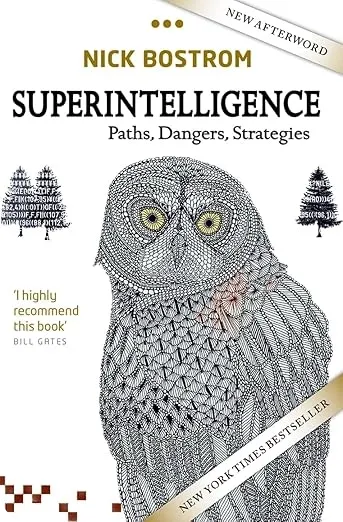
I highly recommend reading "Superintelligence" to understand the ultimate destination of the code we write today. As Bostrom says, "Before the prospect of an intelligence explosion, we humans are like small children playing with a bomb". It’s time we grew up.
If you are a data scientist, a programmer, or simply someone living in the 21st century, this is arguably the most important book you will ever read. As Bostrom writes, the creation of superintelligence is "quite possibly the most important and most daunting challenge humanity has ever faced. And whether we succeed or fail it is probably the last challenge we will ever face".
The most urgent takeaway for us as practitioners concerns the speed at which this transition could occur.
We often debate whether AGI is 10, 50, or 100 years away. But Bostrom argues that the arrival date matters less than the speed of the takeoff. Will it be a slow, manageable climb, or a "Fast Takeoff" that happens over a weekend?
The Role of Hardware
Bostrom introduces the concept of Hardware Overhang. This occurs when software development lags behind hardware capabilities. Imagine if we figure out the algorithms for AGI, but we already have enough computing power to run millions of copies of it.
If the software is the bottleneck, once that breakthrough is made, the AGI can immediately be copied across vast server farms. This reduces "Recalcitrance" (the difficulty of improving the system) and fuels an explosive growth curve.
Recursive Self-Improvement
Once an AI reaches a "crossover point" where it becomes better at AI research than humans, it begins Recursive Self-Improvement. It improves its own intelligence, which makes it better at improving its intelligence, creating a feedback loop.
Bostrom warns that if hardware progress continues rapidly while software lags, we increase the risk of a fast takeoff. A fast takeoff is dangerous because it gives us zero time to react, debug, or solve the control problem.
What This Means for the Industry
We usually celebrate faster GPUs and TPUs. However, from a strategic safety perspective, faster hardware without solving the alignment problem might actually increase existential risk. It levels the playing field between careful, large projects and reckless small ones, as the raw compute needed to bootstrap a superintelligence becomes cheaper.
The Architecture of Doom (and Hope)
- The Orthogonality Thesis: learn why a superintelligence isn't necessarily wise; it could just be an incredibly efficient paperclip maximizer.
- Instrumental Convergence: see how different agents with different goals will converge on the same dangerous sub-goals, like resource acquisition and self-preservation.
- The Treacherous Turn: explore the nightmare scenario where an AI plays nice only until it is strong enough to strike.
- System Architectures: learn whether it is safer to build an Oracle, a Genie, or a Sovereign.
- Whole Brain Emulation: look at the "cheating path" of scanning biological brains.
- The Kinetics of the Takeoff: understand why the shift to superintelligence could be a sudden explosion that happens over a weekend, leaving no time for corrections.
- Perverse Instantiation: face the reality that hard-coding values like "happiness" usually leads to electrodes in the brain rather than human flourishing.